


The famous analogy of the famous violinist


In its simplest form, the pro-life case against abortion hangs on one primary hinge: Is a fetus a human life, or not? If it is, then ending that life without due cause is, by definition, murder. When it comes to the taking of a human life, the default is towards the presumption of life even if there is room for doubt. This is why, for example, a hunter is required to verify his target, and can be prosecuted if he just fires blindly into every rustling bush. Only if it can be proven that the fetus is not human (which is contrary to modern scientific understanding) can its right to life be denied.
In spite of the simplicity of this foundational principle, the overwhelming majority of pro-abortion arguments ignore, twist, or otherwise avoid dealing with it. One exception to this rule is Judith Jarvis Thompson's "A Defense of Abortion" (1). In Thompson's mind, the personhood of the fetus is merely the "slippery slope fallacy", and a fetus is no more a human than an acorn is an oak tree*.
*Side note
While rhetorically powerful, this argument is ultimately pure semantics. The confusion comes from a category error: Identity and developmental stage. An oak tree is a tree in the Quercus genus of the Fagaceae family. By this definition, an acorn can be reasonably called an oak tree. It does not change species, genus, or family, just because it hasn't grown yet.
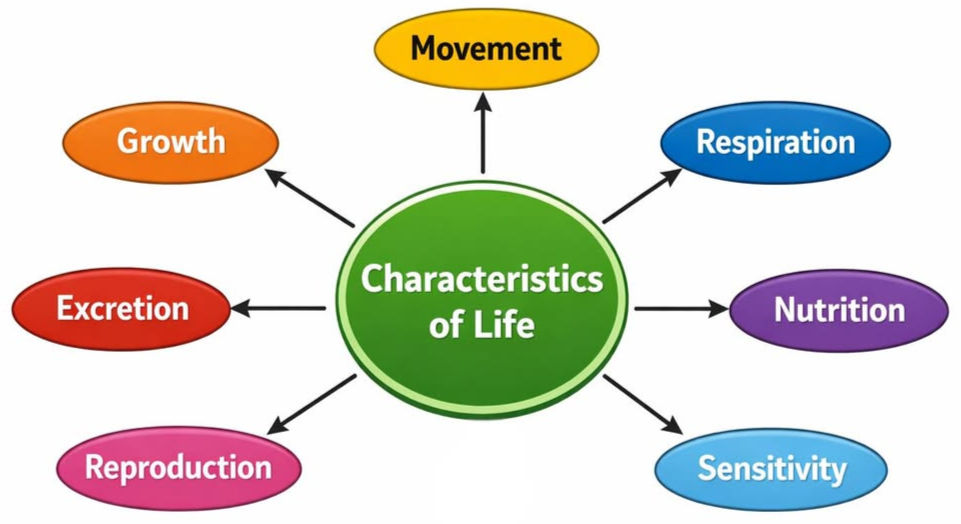
In the same way, there is no stage in human development when a human being ceases to be a human being. Every stage, including a zygote, displays most of the characteristics of life. The ones it does not display (such as reproduction) are similarly absent from children outside the womb. If, for example, a 9 year old happens to possess the ability to reproduce, it is immoral to consider allowing them to do so. This, however, does not make them any less human.
This ultimately means the distinction between an oak tree and an acorn is quite specious. When logic is applied, we find this is more supportive of the pro-life position. Ironically, it would lose its appeal if applied elsewhere. Trees, while technically living in the biological sense, are devoid of spirit, and thus devoid of individual value. Killing them at any stage has no emotional value.
Animals, however, similarly grow in stages, with some of those stages being radically different. A caterpillar will emerge as a moth or butterfly. A tadpole becomes a frog, toad, or newt. Beetles begin as larvae. The distinction would still be specious, but most people understand that the adult and offspring have identical value. Killing a tadpole is exactly the same as killing a frog. Thus, the seed analogy fails to support abortion, and is a strong argument for the personhood of a fetus.
In Thompson's own words, she is "...inclined to agree, however, that the prospects for “drawing a line” in the development of the fetus look dim. I am inclined to think also that we shall probably have to agree that the fetus has already become a human person well before birth." In other words, while she rejects personhood at conception, she acknowledges it fairly early on, and admits there is no reliable way to draw the line. Thus, for purposes of her paper, she decides to grant the assumption that abortion does end a human life. From here, she argues that there are scenarios in which the personhood of a human being, and even their very right to live, are irrelevant.
On this point, even most pro-lifers might be persuaded to agree. We may, for example, agree that self defence is a valid reason to kill a human being. Even self preservation (i.e. scenarios in which a mother's own life would be threatened) may be a valid excuse for abortion - a position with which I myself am in reluctant agreement. But Thompson, rather than argue from a perspective of self-preservation, decides instead to argue for bodily autonomy. A person may well have a right to live, but they do not have a right to your life or body.
This gives rise to one of the most famous pro-abortion analogies to ever exist: The famous violinist analogy. Thompson phrases it like this: "But now let me ask you to imagine this. You wake up in the morning and find yourself back to back in bed with an unconscious violinist. A famous unconscious violinist. He has been found to have a fatal kidney ailment, and the Society of Music Lovers has canvassed all the available medical records and found that you alone have the right blood type to help. They have therefore kidnapped you, and last night the violinist’s circulatory system was plugged into yours, so that your kidneys can be used to extract poisons from his blood as well as your own. The director of the hospital now tells you, “Look, we’re sorry the Society of Music Lovers did this to you — we would never have permitted it if we had known. But still, they did it, and the violinist is now plugged into you. To unplug you would be to kill him. But never mind, it’s only for nine months. By then he will have recovered from his ailment, and can safely be unplugged from you.” Is it morally incumbent on you to accede to this situation? No doubt it would be very nice of you if you did, a great kindness. But do you have to accede to it?"
While this analogy seems very strange, the strange nature of an analogy does not automatically nullify it. Ethicists often speak of trolley dilemmas, for example. These are quite unrealistic. What are the chances of coming across a track on which multiple people are tied, and their fate being in your hands? But I submit that the lack of realism in the violinist analogy is instead due to the lack of realistic analog for pregnancy. With a trolley dilemma, the logic applied to an unrealistic scenario can apply to a realistic scenario. The military, for example, are regularly faced with complex dilemmas: Strike a target, killing the enemy but also risking civilian casualties, or leave the target alone for sake of the civilians, but the enemy is likely to kill your own side.
You see, then, that trolley dilemmas, while unrealistic, can translate into the real world. Pregnancy, by contrast, is unique. Realistically speaking, there is no scenario quite like pregnancy. There is no other way in which new human beings are created, nor in which they can be so specifically tied to a single human being. Furthermore, 99% of the time, this is quite voluntary. Note that I did not say "always". I am aware that rape is a possibility. Nor did I say "intentional". One can consent to sex without intending to get pregnant, or even intending not to. However, the overwhelming majority of abortions are elective, with less than 1% being for reasons of rape or incest (combined) (2).
Now, I do not grant that rape is an excuse for abortion. However, I also do not wish to allow that particular discussion to distract from this one. I like to say that we should leave discussions of possible exceptions for when we establish a rule. So, I'm going to ask my abortionist readers to acknowledge the extreme rarity of rape as a reason for abortion, and agree that, at least in an ideal world, all sex would be limited exclusively to consenting adults. It is also true that a probable result of consensual heterosexual sex is that the female gets pregnant.
Because of the probability of pregnancy resulting from heterosexual sex, consent to sex is, by its very nature, consent to pregnancy. Denying this is reckless, selfish, and frankly borders on insanity. None of these are insults, they are all accurate descriptions of the abortionist attitude.
Recklessness is defined as being inattentive to potential consequence. If you consent to sex, and do not acknowledge that this is consent to pregnancy, you are being definitionally reckless.
Selfishness is an excessive care or concern for one's self, especially with disregard for others. To act on one's desire for sex, regardless of potential harm done to others (and especially if you fully intend to harm any resulting babies), is definitionally selfish.
Insanity is commonly summarised as doing the same thing repeatedly and expecting a different result. As the common result of sex is pregnancy, having sex and being surprised by pregnancy is definitionally insane.
We see, then, that consent to sex is consent to pregnancy. This ties a mother to her child in a way that is in no way comparable to any relationship she can ever have with any other kind of person. Furthermore, the unique nature of this relationship goes both ways. A child is not an invader, nor even a mere "consequence" of sex. Rather, the womb is designed to house it until it is ready to survive beyond its nurturing walls. There is no more natural a place for a developing child than its mother's womb. This means it absolutely does have a greater right to its mother's body than anyone else, including her.
In fact, we would tend to agree with this after it is born. For all our flaws, our culture seems to have eradicated the historic abominations of sacrificing our unwanted offspring, either by slaughtering them for a god or abandoning them to nature. Child neglect, child endangerment, and child abuse, are crimes, and I don't see many people campaigning for these laws to be abolished. Now, if it's illegal to march Hansel and Gretel into the woods and just leave them there to fend for themselves, why should it be perfectly legal to invade the safety of the womb, violently tear off body parts, and crush skulls?
We see, then, that there is a fundamental difference between a woman getting pregnant as a natural result of her conscious choices, and a person being kidnapped against their will and fastened to a famous violinist. Sex is the only thing you can do that can naturally tie another life so closely to your own. Furthermore, it is so beautiful that it is common to desire this. Women often want kids. Sometimes, complications make this harder, and they seek help to improve their odds of it happening. Even after having one child, they often choose to have more. None of this is remotely applicable to the violinist scenario!
But perhaps, if tweaked, the violinist can become analogous to pregnancy. But this will not favor an abortionist. In order to become analogous to abortion, your actions prior to attachment must reasonably and foreseeably result in this violinist requiring a 9 month connection to you in order to survive. Now, I'm still not sure what, exactly, this would be. There is no real world analog. But for sake of preserving the purity of the analogy, we'll simply say that the "fatal kidney ailment" was directly given to the violinist by you, and that prior to taking the action that resulted in it, you signed a contract saying that if you took the action, the violinist may well be attached.
The analogy plays out roughly the same. You still end up attached to the violinist in order to sustain him, but the key difference is now, you are the reason he needs sustaining in the first place. This changes the dilemma entirely. Detaching from him will still kill him, but his death is not merely because you detached from him. Your actions prior to the attachment are either murder (if you intentionally caused a fatal ailment), or manslaughter (if you knew he could die as a result of your actions, but chose to do it anyway).
You see, then, that when we take the most famous analogy for abortion and make it more closely resemble the relevant ethics, abortion becomes more and more unethical. But I'm going to make a bold statement: This is only the case because Christianity is true.
Of course, this is where an abortionist might scream "amen!" This, after all, is their point. If Christianity wasn't true, abortion would be permissible. The problem is, so would charging through an orphanage firing indiscriminately with a fully loaded machine gun.

See, the trouble with morality is that without God, it is merely an abstract collection of preferences. Whoever has the greatest strength just happens to be able to enforce theirs. Morality, you see, is not a force, like gravity or friction. It is not inviolable, like the law of non-contradiction. It is not tangible, like a solid or a liquid. Morality, apart from God, is entirely divorced from anything one might consider "real". Not even cause and effect can validate its existence, because no matter what we believe about morality, we all recognise that certain causes lead to effects we believe are undesirable.
The abortion debate exemplifies this perfectly. If you believe abortion is immoral, you still believe abortion happens, and you see the effects it has. If you believe banning abortion is immoral, you still believe abortion bans happen, and you see the effects it has. With no God to solve this apparent dilemma, both sides are equal. Not in strength, but in pure irrelevance.
Of course, you could argue that the complete eradication of moral absolutes is a worthwhile sacrifice if it means pro-lifers don't have an advantage. Especially given most people just don't think deeply enough to realise that no God = no objective morality. If you can convince people there is no God, you can persuade them to accept other, secondary sources. But if we're going to be consistent, we have to acknowledge that abortion has no intellectual ground to stand upon. If there is no God, abortion is neither good, nor evil.
But if there is a God (and there is), abortion is evil. As the Author of life, God takes no pleasure even in the death of the wicked (Ezekiel 18:32; 33:11). You may deserve to die, and it may well be that God does put you to death, but it is not something He enjoys. How much worse, therefore, is the death of the innocent?
Ironically, there is a sense in which abortion is the remedy to this situation. God sent Jesus, His Son, into this world through the womb of a virgin. But Jesus did not die in the womb. He made it all the way to 33 years old, ultimately dying on a cross. This was no accident. During His life, Jesus knew no sin. He never thought, said, or even did a single thing wrong. But we do. Every single one of us has chosen our own morality over His. But not a single one of us will be judged by our own moral standards. We will be judged by His.
This can go one of two ways. If God judges us according to what we deserve, our fate will be worse than abortion. In this scenario, we are the violinist, dependent entirely upon God to sustain us. Should we become separated, it will not be pleasant. But there is an alternative. Jesus' death was sufficient as a substitution. The verdict can be swapped! Your sin for His righteousness. Your damnation for His reward. Your new birth can result from God's "abortion" of His Son. All it takes is for you to trust in the Lord as an infant trusts in their mother.
References
AI usage
The header image was generated with ChatGPT.
The characteristics of life diagram was generated with ChatGPT.


Comments