


The language of the Eucharist

Updated: Jun 27

Post Publication update: In the following post, I have claimed statements such as "this is my body" and "this is my blood" do not help either side. I have since published an article refuting the argument "is means is", and have changed my position: The statements do, in fact, support a figurative interpretation. Rather than change this article, I have decided to allow it to stand as it is.
The nature of the Eucharist is a contentious issue in the modern era. Is it a "mere" symbol? Does it literally transform into the flesh and blood of Jesus, as the Roman Catholic Church teaches? Is it kind of a blend of the two, as certain Protestant denominations hold? In this article, I intend to solve this dispute in the simplest possible way: By getting it straight from the original source.
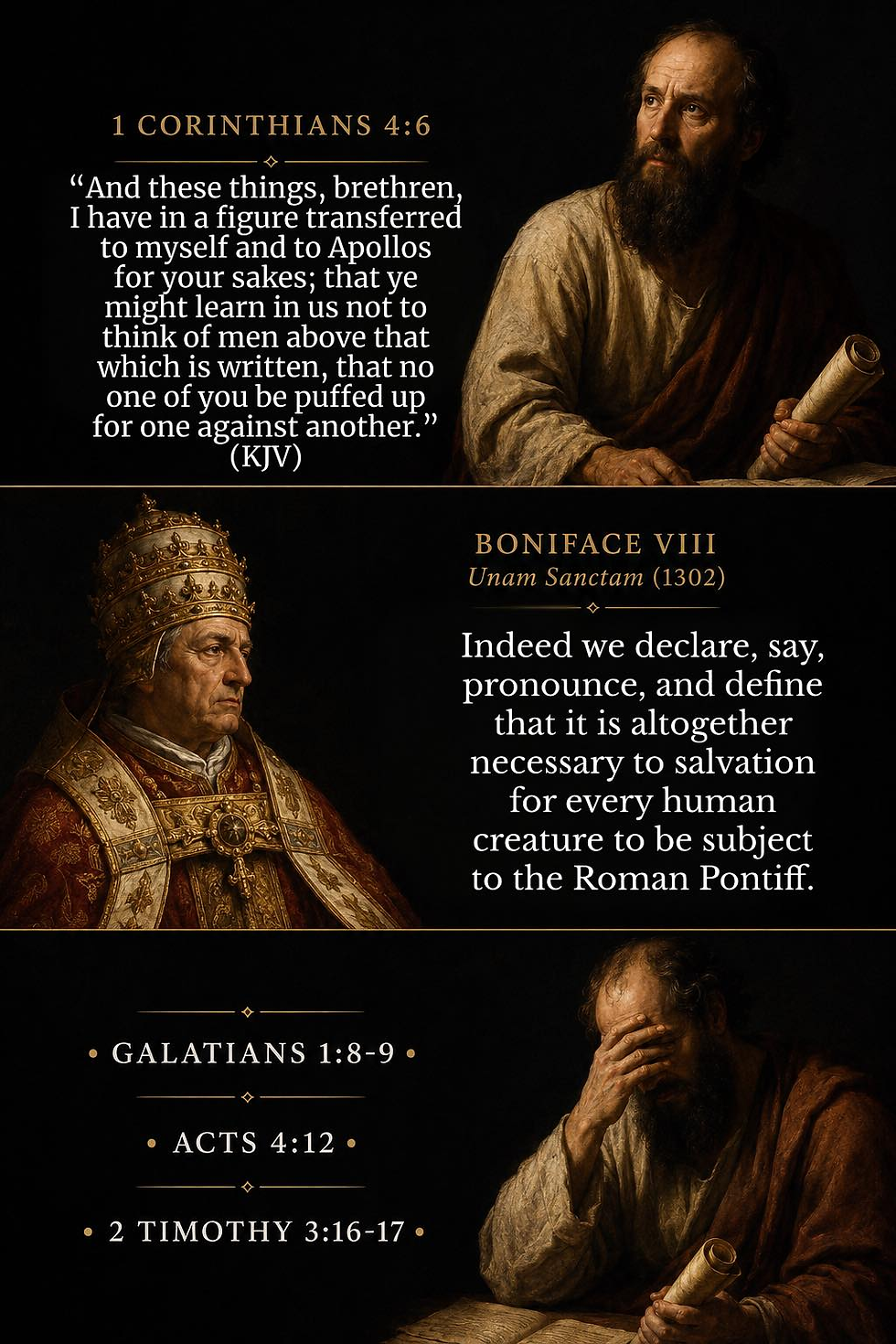
I contend that this is the biggest failure in this discussion. Often, the primary strategy of those with a more literal view is going to the so-called Church "Fathers". This, I believe, causes more problems than it solves. Aside from the fact Scripture presents itself as perspicuous, maximally authoritative, and specifically designed to instruct us in our doctrine, the Church "Fathers" lack this authority, and ironically, must also be interpreted themselves.
Ignatius is a great example, being the most commonly cited Church "Father" in this discussion. Yet, when you consider that he was arguing against Docetists, suddenly it is no longer necessary to interpret him as presenting a literal view. This would even explain why those who tended towards a more symbolic view did not dispute with, or attempt to address him. I ask, therefore, which is more logical? To filter the Church "Fathers" through the word of God, or the word of God through the Church "Fathers"?
Some people may feel more comfortable with the latter. Why perform the arduous task of independent Bible study when you can just interpret your Church's interpretation of the Church "Fathers"' interpretations of the Bible? But if we're going to take a Psalm 119 approach to our Bible study, the former approach is vastly superior. Scripture says what it means, and means what it says. We just need to "Be diligent to present yourself approved to God, a worker who does not need to be ashamed, rightly dividing the word of truth." (2 Timothy 2:15).
So how do we go about that? Well, step one would be to open it. Step two, I think, is to seek out every explicit mention of the Eucharist and see which of the views best fits. Now, I say "explicit" for a very simple reason: I hold to the theory that the clear verses of Scripture interpret the less clear verses. Take Jesus' parables, for example. Looking at Matthew 13:10-13, we read: "And the disciples came and said to Him, “Why do You speak to them in parables?” He answered and said to them, “Because it has been given to you to know the mysteries of the kingdom of heaven, but to them it has not been given. For whoever has, to him more will be given, and he will have abundance; but whoever does not have, even what he has will be taken away from him. Therefore I speak to them in parables, because seeing they do not see, and hearing they do not hear, nor do they understand."
What did Jesus do next? Immediately explained the Parable of the Sower. We can use this clear explanation of the unclear parable to understand what isn't clear from the parable. This obviously does not render the parable itself irrelevant, obsolete, or otherwise unworthy of deep thought. It does, however, mean that we don't need to go looking for some extra meaning where Jesus has already given us the meaning, and we certainly do not use the parable to interpret the explanation of the parable.
In the same way, the clearest passages concerning the Eucharist should be used to interpret any other possible references to the Eucharist. I say "possible" references because there are other places in Scripture that are claimed to be Eucharistic. The most common would be John 6. This, I will not be examining in this article, because I do not grant that this passage is explicitly Eucharistic. In fact, contextually, I do not believe it is related at all. It does use a similar metaphor, just as the lion is used to symbolise both Satan (1 Peter 5:8) and Christ (Revelation 5:5). This shows us that the similarity of a metaphor does not automatically connect two passages. Thus, John 6 will be excluded from this discussion, and I refer you to my other material on this passage.
With that said, there are four explicit passages dealing with the Eucharist. The temptation here is to examine these in great depth, and indeed I could do that. Instead, I am going to lay out three categories of language: Literal, figurative/symbolic, and ambiguous. You will notice I have color coded these. This is because I intend to break with Bible Brain's typical color code system and highlight words or phrases according to the category they fit.
Literal language will be portrayed by deep purple. This is for language that would reasonably compel us to take the text literally.
Figurative/symbolic language will be portrayed by neon green. This is when the language being used points towards metaphor.
Ambiguous language will be portrayed by soft coral. This is for language that, on its own, cannot reasonably support either view over the other.
In short, I am effectively highlighting everything in the text that is useful to establishing which view is the correct view. Once I have done this, I will justify my choices. Just to avoid creating an abominable eyesore, I will refrain from using the typical orange I use to indicate that I am quoting Scripture.
Matthew 26:26-29
And as they were eating, Jesus took bread, blessed and broke it, and gave it to the disciples and said, “Take, eat; this is My body.” Then He took the cup, and gave thanks, and gave it to them, saying, “Drink from it, all of you. For this is My blood of the new covenant, which is shed for many for the remission of sins. But I say to you, I will not drink of this fruit of the vine from now on until that day when I drink it new with you in My Father’s kingdom.”
Justifications
It really is amazing, given just how normal it is to refer to a symbol as the thing itself, that this debate often centers so heavily around that word "is". While it is true that "is" can be taken literally, this is not always the case. To give an obvious example...

In spite of my use of the term "this is my body", it is my assumption that the majority of my readers will understand that I am not a digital being. You would recognise this even if I had used a more normal description of a photograph: "This is me". Certainly, this digital representation does not even come close to the reality. I am not in, under, around, or otherwise literally present with this image. Such is the nature of a metaphor. It is not the least bit unusual to refer to a symbol by claiming it is the thing it represents, and in fact, it would be unusual to describe a symbol as explicitly symbolic. We understand, from the context, whether or not "is" refers to a symbol. This is the case both within and without Scripture.
Far more noteworthy in this account is the way in which Jesus describes the wine. Notice, even after giving thanks for it and declaring "this is My blood of the new covenant", he tells the disciples "I will not drink of this fruit of the vine (...)". This identifies both the accidents and the substance with the wine on both sides of the thanksgiving. I could not justify doing the same with the bread, which in this account is identified as bread only before being identified with Jesus' body. But Jesus had already declared the fruit of the vine to be His blood before reiterating its natural identity as "this fruit of the vine".
Mark 14:22-25
And as they were eating, Jesus took bread, blessed and broke it, and gave it to them and said, “Take, eat; this is My body.” Then He took the cup, and when He had given thanks He gave it to them, and they all drank from it. And He said to them, “This is My blood of the new covenant, which is shed for many. Assuredly, I say to you, I will no longer drink of the fruit of the vine until that day when I drink it new in the kingdom of God.”
Justifications
I don't feel the need to reiterate what I did above justifying my highlight of "this is My body" and "this is My blood" as ambiguous. I will say, to be generous, I deliberately didn't re-highlight "the fruit of the vine" because "the" is more generic than "this".
With that said, I do have room to bring up a side note. The Jewish context of the Bible is essential to understanding it. Jesus is a Jew, perfectly obeying the Law. The Disciples, most notably Peter, were also Jews, understanding all of the Jewish customs. Under the Law, consuming blood (not to mention human flesh) was strictly forbidden, and considered abominable. We know from his vision in Acts 10 that the aforementioned Peter was especially devout in this regard. Refusing a direct command from God to consume that which is "unclean or common" under Jewish Law was not unusual for him. Thus, his complete lack of repulsion here is strong evidence that he did not understand Jesus to be speaking literally. But of course, this is not something I could simply highlight in the text, as it does not appear in any explicitly Eucharistic passage.
Luke 22:14-20
When the hour had come, He sat down, and the twelve apostles with Him. Then He said to them, “With fervent desire I have desired to eat this Passover with you before I suffer; for I say to you, I will no longer eat of it until it is fulfilled in the kingdom of God.” Then He took the cup, and gave thanks, and said, “Take this and divide it among yourselves; for I say to you, I will not drink of the fruit of the vine until the kingdom of God comes.” And He took bread, gave thanks and broke it, and gave it to them, saying, “This is My body which is given for you; do this in remembrance of Me.” Likewise He also took the cup after supper, saying, “This cup is the new covenant in My blood, which is shed for you.
Justifications
Once again, "this is My body" is insufficient to establish either interpretation. However, Luke's account adds purpose to narrative. By commanding the Disciples to do this "in remembrance of Me", Jesus gives strong support to the symbolic view. To "remember" is to call to mind that which is not present. From here, I could deviate and show how Jesus rather explicitly said not to believe anyone who says "here is the Christ", but this would be going off topic, so I'm just going to leave it as a side note to ponder. What's important here is that remembrance is not an act of "making present" the thing we are remembering. Rather, it assumes its absence.
I highlighted "This cup is..." because it throws an interesting spanner in the works of the literal interpretation. Notice how Jesus specifically highlights the cup. He doesn't say the contents of the cup is His blood, He says the cup itself is the new covenant in His blood. This does two things. First, it forces those who hold a literal view to consider the cup as Christ's blood as well. Second, it actually puts some distance between the "fruit of the vine" and Jesus' blood. It does not completely sever the connection (nor should it), but the distance is significant. We are no longer dealing with one liquid being directly identified with another. Rather, a symbol is being connected with an abstract reality.
1 Corinthians 10:16-18
The cup of blessing which we bless, is it not the communion of the blood of Christ? The bread which we break, is it not the communion of the body of Christ? For we, though many, are one bread and one body; for we all partake of that one bread. Observe Israel after the flesh: Are not those who eat of the sacrifices partakers of the altar?
Justifications
Initially, the temptation was for me to just leave this one alone entirely. I intended to include it, because it is an explicit reference to the Eucharist, but I didn't consider that it might help indicate which view is correct.
However, I noticed that Paul puts a small amount of distance here between the host (the "cup of blessing" and "the bread which we break"), and the Lord. Rather than flat out asserting "The cup of blessing which we bless is the blood of Christ" etc., he asks "is it not the communion of the blood" etc. The context here is the significance of the symbol. It's not just a pretty symbol, like a stained glass window, a painting, or a sculpture. The Eucharist is especially holy. It is uniting ourselves with Christ in a truly special way. It's just that this special way is not literal cannibalism, which again would have been an abomination to this zealous Pharisee (Acts 23:6) educated in the traditions of his fathers (Galatians 1:14).
I also feel it would be a disservice not to note the way Paul, in a sense, reverses the metaphor. He says we are one body. This is how the Bible refers to the Church over and over again. Not merely one body, but actually Christ's body (1 Corinthians 12:27). It would be literal blasphemy to claim we are literally Christ's body, as that would be claiming to be God. Personally, I find it strange to suggest ascribing Deity to perishable and consumable objects is any less blasphemous than ascribing Deity to an idol of gold or bronze.
1 Corinthians 11:17-29
Now in giving these instructions I do not praise you, since you come together not for the better but for the worse. For first of all, when you come together as a church, I hear that there are divisions among you, and in part I believe it. For there must also be factions among you, that those who are approved may be recognized among you. Therefore when you come together in one place, it is not to eat the Lord’s Supper. For in eating, each one takes his own supper ahead of others; and one is hungry and another is drunk. What! Do you not have houses to eat and drink in? Or do you despise the church of God and shame those who have nothing? What shall I say to you? Shall I praise you in this? I do not praise you. For I received from the Lord that which I also delivered to you: that the Lord Jesus on the same night in which He was betrayed took bread; and when He had given thanks, He broke it and said, “Take, eat; this is My body which is broken for you; do this in remembrance of Me.” In the same manner He also took the cup after supper, saying, “This cup is the new covenant in My blood. This do, as often as you drink it, in remembrance of Me.” For as often as you eat this bread and drink this cup, you proclaim the Lord’s death till He comes. Therefore whoever eats this bread or drinks this cup of the Lord in an unworthy manner will be guilty of the body and blood of the Lord. But let a man examine himself, and so let him eat of the bread and drink of the cup. For he who eats and drinks in an unworthy manner eats and drinks judgment to himself, not discerning the Lord’s body.
Justifications
A lot of the same elements pop up here. There's the ambiguous "this is My body" again, there's "do this in remembrance of me" (stated twice), and there's the distance placed between the wine and the blood by associating the cup with the covenant.
But Paul adds a new element: We proclaim the Lord's death until He comes. This is a double whammy, so to speak. First, "proclaiming" is more in keeping with a symbol than a literal present phenomenon. And I firmly believe this is how the symbol was used historically, which explains a lot of Church "Father" quotes. This would be deviating from the intended topic of the article to defend, so I won't do it here, but it's food for thought (pun intended).
Second, notice how we proclaim the Lord's death until He comes. Not "here He is, now eat Him". Until He comes. This implies He has not. Now, to be clear, I don't subscribe to the idea that Jesus must only ever be seated at the right hand of the Father until the end. Such a view would make it really awkward to interpret Paul's own conversion, for example. However, I do believe that His presence on Earth is primarily Spiritual. I also believe that He is 100% human. This is just basic Christian doctrine: Jesus' body is not omnipresent (nor is it bread).
I also highlighted "...whoever eats this bread or drinks this cup of the Lord in an unworthy manner will be guilty of the body and blood of the Lord". This, I have done only because I am familiar enough with these debates to know how much weight Literalists hang on it. "How can you be guilty of the body and blood of the Lord if it's not literally the body and blood of the Lord?", they ask.
This, first of all, is a non sequitor. Obviously, if it really was the body and blood of Christ, it would make sense, but it would also make sense if it is the symbol of the body and blood of Christ. We see the same with human symbols. Defacing an image, such as a statue, is seen as defacing the thing itself. Think of the cliche picture on a dartboard.
But adding to this point, consider that God Himself says "“Whoever sheds man’s blood, By man his blood shall be shed; For in the image of God He made man." (Genesis 9:6). The image of God in man is so precious that to kill a man is a capital crime. One might say that murder makes one guilty with regard to God. But only one man's image of God is so significant as to be legitimately synonymous. Jesus is the image of the invisible God (Colossians 1:15) in a way we can never hope to be.
You see, then, that it is entirely possible to be guilty regarding a thing by disrespecting its image. Therefore, to be guilty regarding the body and blood of the Lord lends no weight to either the symbolic or literal view.
Finally, I highlighted "not discerning the Lord’s body". I confess, this one, I initially overlooked, and did not think to consider it until after this article was published and it was pointed out to me. This was quite an oversight on my part, as it's not entirely uncommon to argue from it. But as the saying goes, "better late than never".
First, this is another non-sequitor. If we assume he is directly speaking about the bread, "discern" doesn't mean "recognise as literal". Failure to discern the object of a symbol is considered highly offensive by those who revere it. Consider, for example, the time I shot the Union Flag in the U.S. For me, the intention was a middle finger to British gun control, which I believe to be a human rights violation. To the veteran running the shooting range, however, my gesture was a middle finger to the military. Is the flag the military? No. But you could argue, as he did in all but word, that I have failed to discern the men who died for this country.
With that said, it's interesting to note that Paul says "the body", but does not also say "the blood". This opens a possibility: That he is speaking more specifically about the ecclesial body (i.e. the Church).
This interpretation makes sense in the context of the passage as a whole. Let's re-read verses 17-22: "Now in giving these instructions I do not praise you, since you come together not for the better but for the worse. For first of all, when you come together as a church, I hear that there are divisions among you, and in part I believe it. For there must also be factions among you, that those who are approved may be recognized among you. Therefore when you come together in one place, it is not to eat the Lord’s Supper. For in eating, each one takes his own supper ahead of others; and one is hungry and another is drunk. What! Do you not have houses to eat and drink in? Or do you despise the church of God and shame those who have nothing? What shall I say to you? Shall I praise you in this? I do not praise you."
Notice, then, that the problem is abuses against members of the body. In fact, in rebuking these abuses, Paul even asks "...do you despise the church of God and shame those who have nothing?" Now harken back to verse 10:17, which we looked at earlier: "Because there is one loaf, we, who are many, are one body, for we all share the one loaf." We, who are many, are what? "One body".
This is actually a common theme throughout this epistle. Both before and after dealing with the Eucharist, Paul either alludes to the Church in terms of the body of Christ, or explicitly identifies us as His body, several times just in this epistle. In 1 Corinthians 12:12-27, almost every verse relates the Church to the body before concluding "Now you are the body of Christ, and members individually."
And this phenomenon is not limited to just 1 Corinthians. It is prominent in several of Paul's epistles. To give a few examples:
"For as we have many members in one body, but all the members do not have the same function, so we, being many, are one body in Christ, and individually members of one another." - Romans 12:4-5
"And He put all things under His feet, and gave Him to be head over all things to the church, which is His body, the fullness of Him who fills all in all." - Ephesians 1:22-23
"And He is the head of the body, the church, who is the beginning, the firstborn from the dead, that in all things He may have the preeminence." - Colossians 1:18
You see, then, that identifying the Church with, or as, the body of Christ, is just Paul's style of writing. The fact that this one instance happens to correspond with a discussion on the Eucharist does make it plausible that Paul may be referring to the bread as the body. Why not remove all doubt by saying "not discerning the Lord's body and blood"? The Lord alone knows why He inspired Paul to write as he did. But without this addition, and especially with the other context clues previously mentioned, it also remains plausible that "not discerning the Lord's body" corresponds directly with despising the the Church of God.
To really nail this coffin, consider that even if we do not accept that Paul is talking about the Church in 1 Corinthians 11:29, we do have to accept that he does call the Church the body of Christ elsewhere. Yet, no one argues that we are literally the body of Christ. This causes quite the headache for the literalists. On the one hand, "this is my body" can somehow only be interpreted literally. On the other hand, interpreting "you are my body" literally would be actual blasphemy.
Conclusion
Having examined the most explicit verses on the Eucharist, we see that the language is overwhelmingly supportive of the symbolic interpretation. There is language that cannot tip the balance. However, there are some things within the text that are only consistent with a symbolic interpretation. On the other hand, there is not a single word, statement, or other indication, that would compel us to believe the Eucharist is literally the flesh and blood of Christ in any sense. Therefore, going by the plainest teachings of Scripture, the Eucharist is a ritual of remembrance and proclamation. Christ is certainly present, in the sense that He is present in all Church affairs. But the bread and wine remain just that: Physical food and drink, no different than when it is consumed on any other occasion.
AI usage
The header image was generated by Wonder AI.


Comments