


The Eucharist: Flesh and blood, or symbol thereof?


The following article is a detailed, point-by-point response, and includes several side notes. For your convenience, a contents page is included here:
Background context
On April 10th 2026, a Facebook page by the name of Pentecostal Peacock posted
"Alright guys,
Everyone believed in the real presence of Christ in the Eucharist/Lord’s Supper/Holy Communion back in the days of the early church, so what the heck actually happened?
Why do some people think it’s just a memorial? Because I’m not buying it."
I replied in the comments section, saying "Well, first, I'm not buying that "everyone believed (...) back in the days of the early Church". Even in genuine ignorance, I wouldn't even flinch at it because I know what the Bible says about it. Coincidentally, I even just finished a draft article where I take a highlighter to every explicit reference to the Eucharist in Scripture.
But as it stands, I'm NOT genuinely ignorant of the history surrounding the real presence. One of my oldest articles responding to Catholicism's approach to history lists several examples of the symbolic interpretation in the early Church. It's an early article, so of course I've learned more since then, but the long and short of it is the symbolic interpretation shows up quite early. Furthermore, even the idea that the early Church promoted the real presence is ironically based on the idea that they RESPONDED to those who did not. How can they respond to a view that does not exist? The reality is that they weren't responding to those who rejected the real presence, but to those who rejected the Eucharist itself.
All of this ultimately culminated in the "Great Eucharistic Controversy" in the 9th century. THIS is when the Real Presence became official Catholic doctrine. Prior to this, even Catholic monks debated the issue of the Real Presence, and it was totally legitimate for them to do so.
Ultimately, the historical argument is favored where the Biblical argument is weak. People typically appeal to it because they know most Christians don't study it. But the truth is, "history" is only what has survived. Even within what has survived, we know of things that have not, with some works (e.g. "Contra Celsum") being responses to things that have since perished. If there is no active attempt to preserve something, the chances are it won't last long. When there are active attempts to destroy something (which the Roman Catholic Church is notorious for having done, burning both written works AND their authors), it has even less chance of surviving. Basically, when we look at what has survived, we do not see a unanimous declaration of the Real Presence in history. When we ask what might not have survived, we see a concerted effort to make sure almost nothing against the Real Presence did. The exception? Yes, Scripture. The Scripture that clearly teaches that we cling to these symbols in REMEMBRANCE of Christ (very explicit memorial language), PROCLAIMING His death (again, memorial language) UNTIL He comes (i.e. He has not yet come, and Christ said pay no attention to anyone who says He has returned in hidden form). In other words, the only early Church document that actually matters clearly presents the memorial view.
Which is why most Pentecostals, as far as I'm aware, also take that view, so frankly, this whole post confuses me, buuuuuut there's your answer.
Blessings in Christ, who is really present with His Church, which is His body, regardless of where and when we take communion."
I then linked to three of my own articles, which were alluded to in the comment:
Finally, I attached the header image for the article "The Language of the Eucharist", which is currently scheduled for June 8th 2026.

Following this, a page called "A Little Katholic Kappa" posted a very respectful reply that I thought deserved a response. But as usual, Facebook's comment format made that less than ideal. In spite of my attempts to condense the reply by leaving out a bunch of details, I hit the character limit, had to use CAPS for emphasis (which can sound a bit "shouty"), and of course can't use my color code or other visual aids. Plus, what's the point of putting that much effort into a Facebook comment only two or three people are ever going to see? Solution: Load up the Wix blog editor and publish an article for all to see.
I will of course be using my usual response format. First, I will reproduce Kappa's original comment in full, and unedited. Following this, I will re-quote him, and respond.
"Hmm...I appreciate the thought you have put into this, and I agree that both Scripture and history matter here. I also want to be fair to your point. The question is not whether absolutely every Christian in the early Church held the Real Presence, but what the ordinary and widespread belief actually was.
When we look at the earliest sources, figures like Ignatius of Antioch, Justin Martyr, and Irenaeus of Lyons do not present the Eucharist as a debated or minority position. They speak of it in a direct and matter of fact way, as something already received within the life of the Church.
What is especially telling is that when disagreement appears, it is not presented as a legitimate alternative tradition within the Church. It is treated as a deviation. Ignatius, for example, does not describe a symbolic interpretation as one acceptable option among many. He explicitly identifies those who deny that the Eucharist is the flesh of Christ as departing from the apostolic faith. So even if we grant that not every individual held the same view, the evidence we do have points to the Real Presence as the normative belief, not a fringe position. The burden of proof would then fall on demonstrating that a widespread and competing symbolic tradition existed alongside it, rather than simply noting that disagreement was possible.
Second, the idea that the early Church was only responding to people who rejected the Eucharist entirely does not fit the actual language of those responses. The criticism is not aimed at people who merely abstain, but at those who deny what the Eucharist is. That means the disagreement itself was about the nature of the Eucharist, and the Real Presence is being defended as something already held, not introduced as a new idea.
Third, the ninth century controversy did not introduce the Real Presence as a new doctrine. It was a debate about how Christ is present, not whether He is present. Figures like Paschasius Radbertus and Ratramnus disagreed on the mode of presence, but both operated within a framework that assumed the Eucharist is more than a symbol. The Church was clarifying language, not creating belief from nothing.
Fourth, it is true that symbolic language appears in early Christian writing. But in the ancient world, symbol did not mean what it often means today. A symbol was something that participated in the reality it signified. So when early Christians used symbolic language, they were not reducing the Eucharist to a mental reminder. They were expressing a sacramental mystery using categories that are foreign to modern assumptions.
Fifth, the idea that opposing views were largely lost due to suppression is very difficult to sustain historically. We still possess detailed records of heresies, internal disputes, and even criticisms of Christianity from its earliest centuries. If there had been a widespread early tradition of a purely memorial view, we would expect at least some clear and consistent evidence of it surviving. Instead, what we find consistently is language that affirms a real participation in the body and blood of Christ.
Finally, on Scripture, the Greek text itself deserves careful attention.
When Christ says “do this in remembrance of me,” the word used is anamnesis. In its Jewish and liturgical context, this does not mean a mere mental recall. It refers to a memorial that makes a past event present in a real and participatory way, much like the Passover.
In Gospel of John chapter 6, the language becomes even more striking. When Jesus says “eat,” He shifts from a more general word (phago) to a much more graphic term (trogo), which means to chew or gnaw. This intensifies the realism of the statement rather than softening it. And when many disciples leave, He does not correct their understanding or explain that He was speaking symbolically.
In First Epistle to the Corinthians chapter 11, Paul says that whoever receives unworthily is guilty of the body and blood of the Lord. The Greek here, “enochos estin tou somatos kai tou haimatos,” carries the sense of being liable for or answerable for something real, not merely symbolic. It is difficult to see how someone could incur guilt with respect to Christ’s body and blood if the Eucharist is only a symbol.
So when we look closely at the language of Scripture itself, it does not naturally point toward a purely memorial understanding. It points toward something much stronger.
Taken together, both the historical witness and the Scriptural language point in the same direction. The Real Presence does not appear as a late invention, but as an early and consistent belief that was later clarified, not created."
Setting the tone
"Hmm...I appreciate the thought you have put into this and I agree that both Scripture and history matter here. I also want to be fair to your point."
This is potentially the most important aspect of the comment aside from the topic itself. Far too often, the most prominent voices are also the most obstinate. This is amplified by a factor of thousands on social media platforms. Furthermore, when you're dedicated enough to your view to create an entire page for it, you're sending the world a message: Here I stand, I can do no other. So, naturally, for an explicitly Catholic page to address me with gentleness and respect (1 Peter 3:15) is neither an expected, nor common experience. Therefore, with these few words, Kappa set the tone for this entire dialogue, and stood out as a credit to his Church.
With that said, as I explicitly told him, I do not believe his Church to be worthy of such credit. While I do not believe it is impossible to be a Christian and identify as Roman Catholic, I firmly believe the Roman Catholic Church is inherently anti-Christian, and is irreconcilable with the Christian faith. Despite this, I want to make one thing absolutely clear: Hostility is inexcusable. It is my hope that I can match Kappa's Christian attitude towards this discussion with an equally Christian desire for civility. I disagree with him, I do not hate him. This cannot be stressed enough, especially in the era of "hate speech" and "safe spaces".
Before moving on, I feel there is a clarification that needs to be made. While Kappa says "I agree that both Scripture and history matter here", I actually do not. I will be fleshing this out in more detail throughout the article, but while the words "history doesn't matter" don't really make sense, I will say Scripture trumps all history outside of itself. Furthermore, I believe the faith was delivered once for all to the saints (Jude 1:3) in the first century. Therefore, anything occurring after that is functionally irrelevant.
Every word I say, both from this point on, and indeed anywhere on Bible Brain, should be interpreted with the understanding that if I speak about any source beyond the Scriptures, I regard it as subject to, and potentially invalidated by, the word of God. I will never say the same in the other direction.
The vitality of Scripture, and the role of tradition
"The question is not whether absolutely every Christian in the early Church held the Real Presence, but what the ordinary and widespread belief actually was."
This actually ties in to what I said above. All three parties to this discussion are asking different questions. The original question was "...what the heck actually happened? Why do some people think it’s just a memorial?" This is because of Peacock's erroneous understanding that "Everyone believed in the real presence of Christ in the Eucharist/Lord’s Supper/Holy Communion back in the days of the early church...". This is the context of my original response, and of course context matters. Without this specific assumption on Peacock's part, my answer would have gone in another direction. However, the assumption was made, and so my response necessarily factored it in.
This lead to Kappa altering "the question", suggesting we should actually be asking what was ordinary and widespread. And of course, from here, he wants us to assume the Catholic view was that view, and should thus be held today. But there's something missing here, isn't there? Like the sun in the blue sky, we are missing our "light that shines in a dark place", which we would "do well to heed" (2 Peter 1:19-21). Therefore, for me, the question isn't "what was the ordinary and widespread belief?", but "regardless of how widespread it became, what is the Biblical position?"
And of course, this is the Biblical position. Trying to avoid deviating from the Eucharist to Sola Scriptura, Scripture is clear on two things: God's oracles are infallible (Psalm 12:6), but we who receive them are not.
First and foremost, this is obviously true of the Jews, who are literally the only ones specifically credited with the honor of having received His oracles. "What advantage then has the Jew, or what is the profit of circumcision? Much in every way! Chiefly because to them were committed the oracles of God." (Romans 3:1-2). The entire Old Testament was revealed not to an authoritative Church, but to a single nation of stiff-necked rebels (Exodus 32:9) for whom apostasy was ordinary and widespread. In the days of Elijah, this apostasy was so widespread that only 7,000 remained faithful to God over Baal (1 Kings 19:18; cf. Romans 11:4).
Side note on ancient Jewish heresy

It's worth noting that some heresies in the Roman Catholic Church mimic those practiced by apostate Jews. Chief among these is the so-called "Queen of Heaven", found only in two portions of Scripture: Jeremiah 7, and Jeremiah 44. Both of these rebuke dedication to the Queen of Heaven. At no point in Scripture (nor even in the oldest Christian records) is this title transferred to Mary, or even legitimised for any figure. We can reasonably surmise, therefore, that when Roman Catholicism ascribes this title to Mary, it repeats the same error that provoked God to anger, and caused Him to lash out against His chosen people.
This rebellion, of course, is not limited to direct idolatry. By Jesus' time, the Jews were basically done flirting with polytheism, and had dedicated themselves entirely to the single-minded worship of Yahweh. They even boasted of their descent from Abraham, and their alignment with Moses (John 5:45). Yet, they ultimately crucified Jesus. To this day, the partial hardening of which Paul speaks (Romans 11:25) is still in effect. From the first century to the 21st, Jewish believers in Christ have always been a minority. And when it came to the Pharisees, believers were a minority among minorities.
And yet, in Matthew 23:1-3, we read "Then Jesus spoke to the multitudes and to His disciples, saying: “The scribes and the Pharisees sit in Moses’ seat. Therefore whatever they tell you to observe, that observe and do, but do not do according to their works; for they say, and do not do."
Canonical side note
By affirming the authority of the scribes and Pharisees, specifically, Jesus effectively confirmed their canon. Being a classically trained and highly zealous Pharisee (Acts 22:3), and the son of a Pharisee (Acts 23:6), Paul would likewise have been familiar with, and affirmative of, this canon. Both historically speaking, and due to the Pharisaical tradition being the root of modern Rabbinic Judaism, we know that this canon very closely matches the "Protestant" Old Testament canon. The only real difference is the way the books were divided. This is significant, because it is strong evidence that the canon of the Council of Trent, which include the Deuterocanonical books, is erroneous, and would not be recognised by Jesus, Paul, or the other Apostles.
This is highly significant, because the Scribes and Pharisees were a traditional sect of Judaism, effectively being the "Catholic Church" in their day (or, more accurately, the Catholic Church are the Pharisees of our day, minus the explicit endorsement from Christ in Scripture). With this one statement, Jesus affirmed their authority, validated their teachings, and warned that there is leaven in that lump of dough (Matthew 16:6). The Scribes and Pharisees, you see, were hypocrites. They were very zealous for their religion, up to and including being quite dedicated to the memorisation, teaching, and interpretation of the Scriptures. But many times, we see them clash with Christ over various issues. One of their key flaws? "...All too well you reject the commandment of God, that you may keep your tradition." (Mark 7:9).
Clearly, therefore, it is possible for legitimate religious authorities to peddle illegitimate religious tradition. And lest you assume this problem is unique to the Jews, consider Paul's warning to the very ministers he, himself, had trained: "Therefore take heed to yourselves and to all the flock, among which the Holy Spirit has made you overseers, to shepherd the church of God which He purchased with His own blood. For I know this, that after my departure savage wolves will come in among you, not sparing the flock. Also from among yourselves men will rise up, speaking perverse things, to draw away the disciples after themselves. Therefore watch, and remember that for three years I did not cease to warn everyone night and day with tears." (Acts 20:28-31, emphasis added).
Ironically, Paul may have been speaking of his immediate departure from Ephesus, rather than his departure from Earth, because the very phenomenon he described occurred while he was still alive and preaching. Hymenaeus and Philetus are fantastic examples, as they taught profane and idle babblings (2 Timothy 2:16-17). Diotrephes, similarly, obstructed the Apostles (and faithful brethren) in his church (3 John 1:9-10). The entire book of Galatians was written to Apostolic churches who had become estranged from Christ (and by accepting a similar gospel to that found in the Catholic Church).
The book of Galatians even goes as far as to show that while the Apostles were faithful and authoritative stewards of the mysteries of God (1 Corinthians 4:1-2), who instructed us to reject even their words if they departed from the Gospel (Galatians 1:8-9), even they were not always straightforward with it (Galatians 2:14). Worst of all, when they did, that lead even faithful believers astray:
"Now when Peter had come to Antioch, I withstood him to his face, because he was to be blamed; for before certain men came from James, he would eat with the Gentiles; but when they came, he withdrew and separated himself, fearing those who were of the circumcision. And the rest of the Jews also played the hypocrite with him, so that even Barnabas was carried away with their hypocrisy. But when I saw that they were not straightforward about the truth of the gospel, I said to Peter before them all, “If you, being a Jew, live in the manner of Gentiles and not as the Jews, why do you compel Gentiles to live as Jews?" (Galatians 2:11-14, emphasis added).
Now, am I saying "you can't accept Apostolic tradition"? Please understand this: NO. I believe, as Scripture says, that we must "...stand fast and hold the traditions which you were taught, whether by word or our epistle." (2 Thessalonians 2:15). But that requires some very important qualifiers. Starting with the fact that a part of that verse (namely "by word") is no longer possible, since the Apostles are now dead. Paul cannot preach his Gospel by word. Peter cannot preach his Gospel by word. John cannot preach his Gospel by word. So on and so forth. However, as Irenaeus teaches, "We have learned from none others the plan of our salvation, than from those through whom the Gospel has come down to us, which they did at one time proclaim in public, and, at a later period, by the will of God, handed down to us in the Scriptures, to be the ground and pillar of our faith." (1).
This conveniently early (and Catholically respected) Church source matches the pattern we see in Scripture. There wasn't some division between their oral and written teachings. They said the same things as they wrote, sometimes even at the same time. We see this most clearly in Acts 15:27, where it says "We have therefore sent Judas and Silas, who will also report the same things by word of mouth."
The burden of proof, then, is on anyone who wishes to claim the Apostles taught anything by mouth that they didn't commit to writing. Especially if they want to teach that they preserve the unwritten traditions, and that without these unwritten traditions, one cannot understand the written traditions.
Side note on Irenaeus (and how he blocks Catholic hermeneutics)
Regarding heretics, Irenaeus also writes "When, however, they are confuted from the Scriptures, they turn round and accuse these same Scriptures, as if they were not correct, nor of authority, and [assert] that they are ambiguous, and that the truth cannot be extracted from them by those who are ignorant of tradition. For [they allege] that the truth was not delivered by means of written documents, but vivâ voce:" ("vivâ voce" literally meaning "by word of mouth").
This clearly shows that he did not believe extra-Biblical tradition is a requirement to interpret Biblical tradition. Rather, he considers this approach to hermeneutics to be heretical.
There are some Catholic pushbacks, which I have addressed in the article linked above. Suffice to say for sake of this side note, it is illogical to hold two contradictory opinions. We know from these two quotes that Irenaeus regarded the Bible as the complete and perspicuous record of Apostolic tradition. Thus, unless we suggest he may have been a little bit loopy, we cannot also ascribe the view that tradition is required after all. Anything else Irenaeus wrote about the authority of tradition must be taken in light of the fact that he did not believe Scripture required phantom tradition to be understood.
All of this evidence culminates in one simple conclusion: Neither prominence, nor dominance, are sufficient to establish the truth of a given matter. Not even when a view is promoted, or appears to have been promoted, by a faithful source. What matters is alignment with the Holy Scriptures. "All Scripture is given by inspiration of God, and is profitable for doctrine, for reproof, for correction, for instruction in righteousness, that the man of God may be complete, thoroughly equipped for every good work." (2 Timothy 3:16-17).
The history of dispute
"When we look at the earliest sources, figures like Ignatius of Antioch, Justin Martyr, and Irenaeus of Lyons do not present the Eucharist as a debated or minority position. They speak of it in a direct and matter of fact way, as something already received within the life of the Church."
While this is likely just a poor choice of words on Kappa's part, the words he did choose are quite fallacious. Notice how he says these figures "do not present the Eucharist as a debated or minority position". This is the equivocation fallacy: He is using the term "Eucharist" far more specifically than he should.
See, no one is debating "the Eucharist". We all believe in the Eucharist. What we're disputing is the nature of the Eucharist. So, what he means is the specifically Roman Catholic understanding thereof. This, he will effectively go on to admit, was not universally, nor thoroughly taught, until after the Great Eucharistic Controversy.
It's also worth noting at this point that one can reasonably dispute whether the figures he cited genuinely did teach a more literal view. I'll expound on this more when Kappa singles out Ignatius, but for now, suffice to say not everyone who supposedly held a literal view necessarily did.
"What is especially telling is that when disagreement appears, it is not presented as a legitimate alternative tradition within the Church. It is treated as a deviation."
This particular line earns Kappa vast amounts of respect from me. Almost invariably, whenever I debate a Catholic on this topic, they will insist that the symbolic interpretation was invented by either Luther or Zwingli, and is entirely absent from the first 1500 years of Christian tradition. Kappa, by contrast, acknowledges its early existence, but denies its authenticity, claiming it is treated as "deviation".
But this leaves us with the question of why must we do the same? If you have two competing views, it doesn't make vast amounts of sense to say "but my side treated your side as deviation", because that's circular reasoning: You are assuming your view is the default, in order to prove it is the default. If both views exist, they are on equal terms until one is proven over the other.
To do this, we go back to Scripture. Which view best fits the text? Which, of course, everyone is going to claim is their view. But the ones who have the greatest claim to this are those whose view is taken from the text. To figure out who that is, simply ask who prefers to argue from the text? In this case, out of all the views on the Eucharist, who draws the sword of the Spirit (Ephesians 6:17), and who prefers to argue from the Church "Fathers"?
Speaking of the Church "Fathers", they actually prove, beyond reasonable dispute, that Kappa is wrong here. Why? Because many of them did teach this so-called "deviation". At the risk of exposing one of my favorite strategies to a seemingly competent debate opponent, this is actually so clear that I can often use the "Silent Quote" strategy. The Silent Quote Strategy is the practice of quoting a source without attribution in an effort to remove an opponent's interpretive biases. If you tell your opponent "Tertullian said...", they will typically interpret the quote according to the Roman Catholic faith they assume Tertullian held. If you act like Tertullian's words are your own, however, you get results like this:

And that's where you end up on top, because the Catholic has now locked himself into an interpretation that does not fit his preconceptions. In the example above, the Catholic had posted a version of the argument from John 6 (which Kappa will also use later), and I replied by copying and pasting Tertullian's interpretation of the passage. However, because this Catholic believed everyone prior to the Reformation held a literal interpretation, he assumed Tertullian's words were the words of a Protestant and dismissed them as "not valid". Ironically, in spite of my reply pointing out that Tertullian cannot have been a "Protestant" due to dying 1300 years before the Reformation, this guy's only response was that Tertullian cannot have held Protestant views... because he died 1300 years before the Reformation. He could not show Tertullian held to a Roman Catholic interpretation of the Eucharist, and actually didn't try.
This strategy can be used with many so-called Church "Fathers", including some who supposedly did hold to a more Catholic interpretation. Kappa, unlike Mr. Red Blur above, seems wise enough to understand that the symbolic view was present in the early Church. Yet, no one treats these as deviating. Even Origen, who was formally condemned as a heretic at the Synod of Constantinople (543 A.D.), was never condemned for his explicit statement that "We have a symbol of gratitude to God in the bread which we call the Eucharist" (2). Rather, he was condemned for his views on the pre-existence of the soul, and Universalism.
Basically, the easiest pushback against Kappa's claim is to flip it. The symbolic interpretation encountered little resistance in the earliest Church sources. It was never treated as deviation, and some who held symbolic interpretations are even considered "Saints" in certain traditions. So, the question is, if transubstantiation was the normative view, how did anyone get away with explicitly denying that we literally consume Christ's actual flesh and blood? And why did it take 1200 years to establish this particular dogma?
Dealing with Ignatius
"Ignatius, for example, does not describe a symbolic interpretation as one acceptable option among many. He explicitly identifies those who deny that the Eucharist is the flesh of Christ as departing from the apostolic faith."
(...)
"Second, the idea that the early Church was only responding to people who rejected the Eucharist entirely does not fit the actual language of those responses. The criticism is not aimed at people who merely abstain, but at those who deny what the Eucharist is. That means the disagreement itself was about the nature of the Eucharist, and the Real Presence is being defended as something already held, not introduced as a new idea."
Ordinarily, I would attempt to be chronological in my responses. However, Kappa's entire second point seems to fit better with with his point about Ignatius, because it all seems to correspond to the same quote. This happens to be the same quote I, myself, was alluding to.
See, in my original response to Peacock, I said "Furthermore, even the idea that the early Church promoted the real presence is ironically based on the idea that they RESPONDED to those who did not. How can they respond to a view that does not exist? The reality is that they weren't responding to those who rejected the real presence, but to those who rejected the Eucharist itself." That last sentence in particular is an allusion to Ignatius' quote, in which he said "They abstain from Eucharist and prayer because they refuse to acknowledge that the Eucharist is the flesh of our savior Jesus Christ" (3).
This is more than likely the Ignatius quote to which Kappa also alluded. But notice the quote stands in direct conflict with his point. Kappa says "The criticism is not aimed at people who merely abstain...", yet Ignatius explicitly says "They abstain from Eucharist...". So, yes, his specific criticism is aimed at people (specifically the Docetists, who did not believe Jesus really came in the flesh) who "merely" abstain. To this day, while I am aware of many early figures who held to a symbolic interpretation, I have never heard of anyone prior to the 9th century who was condemned for it, nor even attacked. They were seen as legitimate members and defenders of the Church, and many of them still are.
Balancing prominence
"So even if we grant that not every individual held the same view, the evidence we do have points to the Real Presence as the normative belief, not a fringe position."
I'd like to correct Kappa here: I do not believe, nor teach, that Realist views were, in any way, "fringe". I don't believe they're correct, and they were certainly more nuanced and diverse than modern Catholicism allows for, but they were quite common.
Side note: Trinity comparison
It's worth noting that the doctrine of the Trinity has an even more complex history. Biblically speaking, it is indisputable. We see in Scripture that there is one God, and we see that He consists of three co-equal, co-essential persons: The Father is God, the Son is God, the Holy Spirit is God. Yet, it is not historically unanimous, and required quite a battle to establish. Ironically, pre-Nicene "Fathers" even wrote things that sound borderline heretical. Justin Martyr, for example, sounds dangerously close to Subordinationism. Yet, Subordinationism is now recognised as damnable heresy, and it's actually questionable whether Justin Martyr actually held to it. Was he actually a heretic, or was he just limited by the terminology available to him? The latter seems more plausible. We might reasonably suggest that our interpretation of Real Presence quotes are similarly shaped by anachronism. Catholicism had not yet developed, much less canonised, its view on the Eucharist, and there was no friction against the Memorial views. Thus, there was no need to be so explicit.

Furthermore, it's interesting that even Arianism enjoyed a period of cultural dominance, ironically directly following the Council of Nicaea. As this is a side note, it feels strange to go into too much detail, but Arian beliefs persisted, quite aggressively, following the Council of Nicaea. This is actually why Athanasias, a prominent defender of the Nicene creed, is so widely respected. In spite of Arianism's institutional dominance, Athanasias stood firm, enduring persecution, up to and including 5 different exiles. This is why we have the term "Athanasias Contra Mundum" ("Athanasias Against the World"). Now, obviously it's not quite as simple as suggested in the meme attached to this side note. But history genuinely could have taken a different turn. The Catholic Church could very easily be teaching Arianism right now. The Council of Nicaea, if it was ever even acknowledged, could be considered "obscure", or even outright heretical. This is the difference between history (who believed what, and when?) and Scripture (what should we believe at all times?) Whether fringe or widespread, all beliefs must be tested by Scripture. No belief tests Scripture.
"The burden of proof would then fall on demonstrating that a widespread and competing symbolic tradition existed alongside it, rather than simply noting that disagreement was possible."
Unless the claim is "truth is a Democracy, and you're outvoted", this ultimately ends up being circular reasoning. I have shown that the symbolic view was sufficiently prominent to deny its novelty (and it was even held by "big names"), so I have fulfilled any burden of proof that could reasonably be laid upon me. Asking for more reduces the argument to "my guys outnumber your guys", or "my guys disagree with your guys".
The former seems to be beneath Kappa, and the latter seems to be more along the lines of what he's going for. But the problem with the latter is it's entirely circular. It basically says "my guys are so prominent because they're right, and they're right because they're so prominent". This is why the primary argument for our view on the Eucharist must be Scripture, because the God who breathed it (2 Timothy 3:16) is maximally authoritative. You can't outvote Him, you can't over-rule Him, you can't circumvent Him, you can't gatekeep Him, you can only obey Him. Anything else is deviation.
The Great Eucharistic Controversy
"Third, the ninth century controversy did not introduce the Real Presence as a new doctrine."
This, again, misunderstands my original claim. I never claimed the Real Presence was a new doctrine. What I said is that it was never an official dogma until after the Great Eucharistic Controversy. Specifically, it was made a dogma at Fourth Lateran Council in 1215 A.D. Before this, there were debates even within the Roman Catholic Church. In the modern day, you will not hear a Catholic monk say something like "The bread and wine are the body and blood of Christ in a figurative sense", unless it follows something like "Protestants claim...". But that is exactly what Ratramnus believed, and it was not yet considered heretical for him to do so.
"It was a debate about how Christ is present, not whether He is present. Figures like Paschasius Radbertus and Ratramnus disagreed on the mode of presence, but both operated within a framework that assumed the Eucharist is more than a symbol. The Church was clarifying language, not creating belief from nothing."
Given that I just quoted Ratrmnus directly, it's quite clear that he did view the Eucharist as a symbol. Furthermore, he was directly responding to Radbertus' view that it was literally Christ's real flesh and blood. This view got him posthumously condemned as a heretic, and his books were added to the Index of Forbidden Books. His view was actually very close to Martin Luther's. And in his time, that was a legitimate view to hold. In fact, he is not even the most prominent figure to have held it. Augustine of Hippo, considered both a "Saint" and a "Doctor" by the Roman Catholic Church, similarly did not believe in a literal presence, but a spiritual one.
In fact, on John 6, which Kappa himself will go on to cite, Augustine wrote "It is the Spirit that gives life; the flesh profits nothing. The words that I have spoken to you are spirit and life. Understand spiritually what I have said. You are not to eat this body which you see, nor to drink that blood which those who crucify me will pour out. I have commended to you a sacrament; spiritually understood, it will give you life." (4) (Emphasis added).
The long and short of all of this is that the Great Eucharistic Controversy did not introduce the Real Presence as a novelty, but it did build upon it, and solidify one particular view as the official view Catholics were required to believe. Valid disputes were now considered invalid. The beliefs of "Saints" could now lead to anathematisation. Even reading the works of "the other side" could result in excommunication (until the Index of Forbidden Books was formally abolished as recently as 1966). Clearly, the Great Eucharistic Controversy was exactly that: A controversy. A large scale dispute. A fundamental change in the very thinking of Rome. It was not the same thing on a different day, it was an entire shift in Catholic culture, wherein saints became sinners with the stroke of a pen.
The "winning side" may not have been introducing novelty, but they most assuredly set the stage for it. No one in the first, second, third centuries, and so on, would have recognised transubstantiation. The idea that the host could be transformed into the real, historical body of the Lord is alien to Scripture, repugnant to the primarily Jewish minds that formed the early Church, and far beyond anything the early Church had in mind. We may not be talking about a sudden introduction of the Real Presence in a world that lacked it, but we are certainly talking about the evolution of a dogma that never should have been introduced.
What is a symbol?
"Fourth, it is true that symbolic language appears in early Christian writing. But in the ancient world, symbol did not mean what it often means today. A symbol was something that participated in the reality it signified. So when early Christians used symbolic language, they were not reducing the Eucharist to a mental reminder. They were expressing a sacramental mystery using categories that are foreign to modern assumptions."
Once again, Kappa deserves some serious credit here. While he is philosophically locked into the myth of traditional continuity, he nevertheless does what so few Catholics dare to do: Acknowledges inconvenient history. Whereas many of his peers prefer to pretend symbolic views originate with either Zwingli or Luther, Kappa acknowledges that "...symbolic language appears in early Christian writing".
However, his attempts to reconcile this fact with later Catholic dogma leave a lot to be desired. We may start with the very language he uses: "reducing" the Eucharist. This is a loaded term, because it assumes that the memorial views portrayed in Scripture are somehow "reduced".
But is this fair? No, it's circular reasoning again. It starts with the assumption that the Catholic understanding of the Eucharist is the default view, and anything denying it is missing something. I could just as easily say the Catholics are the ones who have "reduced" the Eucharist, because they have deprived the symbol of its meaning by interpreting Christ hyper-literally.
The truth is, the memorial view is based entirely on the words of Scripture. We don't start with a post-Medieval view of the Eucharist and chop it down until it's "just" a memorial. We start with one last meal Jesus had with His disciples. On its own, there would be nothing we could build on that. If Scripture just stopped at "He broke bread, and gave them the cup, saying "Take, eat and drink, for I will not drink this again until I drink it anew in the Kingdom", it would be a beautiful description of some of Christ's final actions before going to the cross.
But Jesus added to it. He blessed the bread, He broke the bread, and He said "do this in remembrance of me". Thus, we take the Eucharist in remembrance of Christ not by "reducing" it, but by obeying what is very clearly written. The burden of proof is on the Catholic to show that we need to add anything on top of this.
At this point, the Catholic might object and say "wait, we're not adding, He did say 'this is my body'", and so on. I plan to say a little more on this when Kappa addresses 1 Corinthians 11, because I have a very important response to that which I don't think I've ever published on Bible Brain. But there is a very easy response to this that should hopefully illustrate the difference between a symbol and a figure of speech:

With that out of the way, let's note a key problem with Kappa's response. In his defence, he is writing casually. It's not an academic treatise, nor even a detailed article like this one. It's a Facebook comment. But note how broadly he speaks about ancient sources without citing even a single one. And that's totally fair, I did the same in my original comment. I did include links to my more detailed material where I did quote the sources, but I didn't quote anyone directly. But it would certainly help if he would have given just one specific example of someone who used symbolic language, but still interpreted the symbol as becoming the actual flesh and blood of Christ.
Contrast this with the quotes I have given in this very article. Notice how Augustine says Jesus did not mean you must eat His flesh and blood, but understand it spiritually. That's not just using symbolic language in a way that's foreign to our culture, that's very explicitly denying that John 6 is Jesus literally requiring us to consume Him. Notice also how Ratranmus, in direct response to Radbertus' literal view, said the host is His flesh and blood in a figurative sense. These two examples could not have made it any clearer that they rejected a literal view.
What's worse is that, using Kappa's logic, it would be impossible to do so. But by nature of symbols, it should reasonably be the default. As a species, we use a lot of symbols. We understand, however, that almost none of them require the literal presence of that which is represented. It is only in a spiritual context that this is even open for question. Yet, if we apply Kappa's logic, even quotes that are explicitly designed to rebuke a literal understanding may be taken as still accepting a literal understanding in a different way. I don't know about you, but I find it far more reasonable to allow symbolic language to remain symbolic.
Does history perish?
"Fifth, the idea that opposing views were largely lost due to suppression is very difficult to sustain historically. We still possess detailed records of heresies, internal disputes, and even criticisms of Christianity from its earliest centuries. If there had been a widespread early tradition of a purely memorial view, we would expect at least some clear and consistent evidence of it surviving."
This is another misunderstanding on Kappa's part, but it is understandable. It falls under my general belief that "extremism breeds extremism". That is, I'm of the opinion that opposition to one extreme view can often come across as accepting or endorsing the other extreme.
When Peacock originally claimed "Everyone believed in the real presence of Christ in the Eucharist/Lord’s Supper/Holy Communion back in the days of the early church...", I responded by pointing out that "the truth is, "history" is only what has survived. Even within what has survived, we know of things that have not, with some works (e.g. "Contra Celsum") being responses to things that have since perished. If there is no active attempt to preserve something, the chances are it won't last long. When there are active attempts to destroy something (which the Roman Catholic Church is notorious for having done, burning both written works AND their authors), it has even less chance of surviving. Basically, when we look at what has survived, we do not see a unanimous declaration of the Real Presence in history. When we ask what might not have survived, we see a concerted effort to make sure almost nothing against the Real Presence did."
The misunderstanding here is subtle. Kappa reads that as me believing "opposing views were largely lost due to suppression". In reality, I was pointing out the exact scenario Kappa himself describes. He notes "We still possess detailed records of heresies, internal disputes, and even criticisms of Christianity from its earliest centuries." What did I highlight in my original comment? I specifically singled out Origen's "Contra Celsum". Contra Celsum is a response to an early criticism of Christianity, but the irony is, had Contra Celsum not been preserved, we wouldn't even have more than a vague awareness that Celsus himself existed. In other words, in order for the argument I was actually making to be "very difficult to sustain historically", the absolute minimum you would need is to fill in the historical gaps I showed do exist.
Interestingly, the Bible itself details works that have since perished. The book of Jashar, Paul's other letters to the Corinthians, and various other annals of Jewish history. Basically, what I'm saying can be reduced to "there are gaps in our historical understanding". This is undeniable, and will remain so until Kappa, or the entire academic world, fills in those gaps.
Side note on historical gaps
It's worth noting that, as Christians, we have a lot of gaps to fill in, but have historically had even more. Regarding our current gaps, we don't have vast amounts of evidence for the Exodus. 600,000 men on foot, besides women and children (Exodus 12:37), yet, they didn't leave many "footprints". We believe the Exodus happened, because the Bible tells us it did. But we haven't found so much as a cartwheel to prove it.
But we also didn't have much evidence for the Hittites for quite some time. In the 1800s, atheists would often point out that the Bible speaks of them, yet at that time, there was neither hide nor hair left over. They were made up specifically in the Bible, or so the evidence appeared. In 1906, that all changed. Their capital city of Hattusas was re-discovered, and there is a whole field of study dedicated to them today.
This is why I like to take playful jabs at Evolutionists, saying "we've found our missing links, where are yours?" But it seems the same can be said about Catholics. It's interesting how often even Catholic apologists will admit their views date back as "early" as the 4th, 5th, 6th centuries, and so on. Why? Because they can't find anything earlier. The further back in history you go, the less Catholic the Church becomes.
The most obvious example is the Papacy. If there is no Pope, there is no Catholic Church. Yet, the earliest Christians did not regard a Papacy. Even when Popes finally show up, they aren't like modern Popes, and their claims of universal authority are largely rejected. So, Kappa wants us to believe everyone regarded Peter and his successors as the visible head of the whole Church militant, without any evidence in the earliest Church writings. In other words, Kappa actually has to rely on the same logic I am presenting here, with one key handicap: I can find all of my beliefs in the first century or earlier, as long as you allow me to treat the Bible as a valid historical source.
More importantly, I didn't just stick with "absence of evidence is not evidence of absence". Don't get me wrong, I absolutely do believe we have a poor representation of the early Church left over today. But what we do have is a solid, early testimony of symbolic understandings. And as I mentioned earlier, these are often so clear that you can quote them to a Catholic without telling them who you're quoting, and they will immediately recognise these views as "Protestant" despite preceding the Reformation. So, I'm not saying "I have no evidence, but here's why". I'm saying "I have plenty of evidence, but there's a reason a lot of it has naturally decayed."
In fact, one thing people tend to miss is that history is also self-fulfilling. If you have a source from the 5th century, the chances are it doesn't exist in a vacuum. Its author would have been influenced by earlier sources. So, what we end up with is a conglomeration of more popular views. Especially when that popularity is propelled by the status of a specific author, by the influence of consensus, and of course, later on, by force. When we read of basically any view, we have to ask, are they drawing from Scripture, or a prior Church "Father"?
But here's another question we can (and should) ask. Let's cut down that entire tree and leave Scripture as the root. If we were to obliterate the entire history of discussion, what kind of view would we get from Scripture? We all know the Catholic view would perish at this point. Their main argument is history because they can't find it in Scripture. Our main argument is Scripture because even though we absolutely can find it in history, we just don't need to.
"Instead, what we find consistently is language that affirms a real participation in the body and blood of Christ."
This is actually an interesting switch. The modern Catholic view is far more specific than just "a real participation". They believe "...that by the consecration of the bread and wine there takes place a change of the whole substance of the bread into the substance of the body of Christ our Lord and of the whole substance of the wine into the substance of his blood. This change the holy Catholic Church has fittingly and properly called transubstantiation."" (5). "By the consecration the transubstantiation of the bread and wine into the Body and Blood of Christ is brought about. Under the consecrated species of bread and wine Christ himself, living and glorious, is present in a true, real, and substantial manner: his Body and his Blood, with his soul and his divinity (cf. Council of Trent: DS 1640; 1651)." (6).
Basically, they don't just believe they're participating in the body and blood of Christ. In fact, to be clear, I do believe the Eucharist is participation in the body and blood of Christ. I can also make a similar comparison: Baptism. Paul tells us "Or do you not know that as many of us as were baptized into Christ Jesus were baptized into His death? Therefore we were buried with Him through baptism into death, that just as Christ was raised from the dead by the glory of the Father, even so we also should walk in newness of life." (Romans 6:3-4). I was baptised into Christ Jesus, yet I was born nearly 2,000 years after He died, and I've never been within 3,000 miles of the place He was buried. So, I can say I am really participating in His death and burial, but I cannot say (and Catholics also do not believe) that I am literally crucified with Christ (Galatians 2:20).
So, it's very easy for me to see a symbol as a real participation. But Catholics go further than "participation". They believe they are consuming the body and blood of Christ. So, my challenge to Kappa is to amend his statement. Instead of saying "...what we find consistently is language that affirms a real participation in the body and blood of Christ", which is both true and a point of agreement between us, try saying "what we find consistently is language that affirms the transubstantiation of the host into the literal body and blood of Christ". That's the doctrine Kappa is required to believe by his Church, and is philosophically locked into believing the original Church taught (even if "in seed form"), but it isn't something he can sustain. Transubstantiation evolved long after the Eucharist was originally delivered to the Apostles, long after it was enshrined in Holy Writ, long after the death of literally anyone who knew the Lord in the flesh, and ironically, long after the Catholic Church first emerged out of Rome.
The original Greek
"Finally, on Scripture, the Greek text itself deserves careful attention."
While I agree, the unfortunate fact is the Greek deserves attention, but it's excessively rare for anyone to be able to give it that attention. I can't read Greek. Can you? Does Kappa? I did ask, but I have received no reply.
Regardless of whether or not Kappa knows Greek, the majority of people who appeal to the Greek do not. They just know their opponents aren't likely to either. What that means is that when you tell me what the Bible says in Greek, you must tell me in English. But that's called a "translation". As English speakers, we're privileged to already have a vast array of those.
The thing about translations is that even the most formal ones apply a degree of interpretive licence. I actually gave an example in the side note on historical gaps. Exodus 12:37, in the original Hebrew, does not mention women, yet most translations will either include women, or even swap "children" for "and their families". When meaning is potentially lost, it is obviously acceptable to take such interpretive liberties in translation. Yet, no translation, in any language, changes the nature of the Eucharist. In fact, many Catholic arguments from the Greek would be fairly easy to integrate into an English translation, including some of Kappa's own. But not even Catholic translations do this. Every Bible translation in existence makes it very clear that we partake in the Eucharist in remembrance of Christ.
On top of all this, you cannot blame translations for beliefs that preceded them. Early authors who held to more symbolic interpretations obviously didn't rely on the KJV to draw those conclusions. They obviously wouldn't have said "ἐὰν ἀνατρέξῃς εἰς τὸ Ἑλληνικόν" ("if you refer to the Greek..."), they very often were referring to the Greek. They also had shorter chains of transmission, so tradition had less time to develop. Yet, their beliefs were sufficiently similar to modern "Protestant" views that even a Catholic can recognise them as such.
So, in short, while the Greek undeniably deserves attention, it's fair to say it has already received the most attention a non-speaker can reasonably give it. Most of us can't read Greek, but most of us can read translations produced by those who can.
Side note on the history of translation
It's worth noting that English translations are basically a product of the Reformation. During the Reformation, the Catholic Church did not see Bible study as within the capabilities of the laity. It was assumed that if just anyone is allowed to read the Bible, heresy would run rampant. Thus, the Catholic Church did not allow private Bible ownership, and declared that anyone seeking to translate the Bible without the authority of the Church would be punished for aiding and abetting heresy.
One man who suffered that penalty was William Tyndale, who was strangled and burned at the stake for it. Tyndale is said to have spoken many languages - including Greek - "as if they were his native tongue". He was more than qualified to singlehandedly translate the Bible, and in fact the modern KJV relied very heavily on his work. But historians must never forget how the Roman Catholic Church violently impeded that work because they feared the implications of an informed laity.
Anamnēsis
"When Christ says “do this in remembrance of me,” the word used is anamnesis. In its Jewish and liturgical context, this does not mean a mere mental recall. It refers to a memorial that makes a past event present in a real and participatory way, much like the Passover."
It's interesting that Kappa would bring up the Jewish context. This is good practice, but it bodes horribly for the Eucharist. If at all possible, for a moment, consider how transubstantiation sounds to a relatively unbiased person outside the Catholic Church. I say relatively because the true absence of bias is impossible, but it's safe to say that prior exposure to a view is instrumental in "normalising" it.

In my personal life, I am a fan of dark humor. I'm not opposed to the occasional cannibal joke, like the one to the right. But I think we can all agree that actual cannibalism requires a mindset that most people just don't have. It's not healthy, and it certainly isn't holy. In fact, unless we assume a literal interpretation of the Eucharist, 100% of references to cannibalism in the Bible are negative.
More specifically, while some Gentiles are unopposed to things like "black pudding", Scripture is rather clear on the morality of consuming blood. When Noah was given all things as the green plants for food, he was still commanded "But you must not eat meat that has its lifeblood still in it." (Genesis 9:4). In the Law, God states "“‘I will set my face against any Israelite or any foreigner residing among them who eats blood, and I will cut them off from the people. For the life of a creature is in the blood, and I have given it to you to make atonement for yourselves on the altar; it is the blood that makes atonement for one’s life. Therefore I say to the Israelites, “None of you may eat blood, nor may any foreigner residing among you eat blood.”" (Leviticus 17:10-12). The conclusion of the Council of Jerusalem commanded the Gentiles "You are to abstain from food sacrificed to idols, from blood, from the meat of strangled animals and from sexual immorality. You will do well to avoid these things." (Acts 15:29).
We see, then, that the Jewish context of Scripture takes the standard "ick" factor of cannibalism and amplifies it many times. No Jew (least of all Peter, who resisted God's direct command to eat unclean food in his vision in Acts 10:9-16) would hear "you are to eat my flesh and drink my blood" and interpret this as morally acceptable. It would be understood as either a direct affront to the Law, or a strongly worded statement to really drive a point home.
Which actually ties in quite nicely with Christ's use of anamnēsis. Contrary to Kappa's claim, there is nothing about this term that inherently suggests a past event is being made present. This is a theological viewpoint being imposed on the word, not the word being used to shape a theological viewpoint.
To show this, we can point out that there is one other place in Scripture in which the term is used. Namely, in Hebrews 10:1-4, we read "For the law, having a shadow of the good things to come, and not the very image of the things, can never with these same sacrifices, which they offer continually year by year, make those who approach perfect. For then would they not have ceased to be offered? For the worshipers, once purified, would have had no more consciousness of sins. But in those sacrifices there is a reminder of sins every year. For it is not possible that the blood of bulls and goats could take away sins." The term for "a reminder"? Anamnēsis.
So, what Kappa would have to argue, in order to impose his interpretation upon the word, is that whenever the priests would make sacrifices, they weren't merely calling the sins of the past to remembrance, but actively participating in them.
It is perhaps no small coincidence that Hebrews 10 further lends to a refutation of Catholicism's version of the Eucharist. Starting in verse 10, we read "By that will we have been sanctified through the offering of the body of Jesus Christ once for all. And every priest stands ministering daily and offering repeatedly the same sacrifices, which can never take away sins. But this Man, after He had offered one sacrifice for sins forever, sat down at the right hand of God, from that time waiting till His enemies are made His footstool. For by one offering He has perfected forever those who are being sanctified. But the Holy Spirit also witnesses to us; for after He had said before, “This is the covenant that I will make with them after those days, says the Lord: I will put My laws into their hearts, and in their minds I will write them,” then He adds, “Their sins and their lawless deeds I will remember no more.” Now where there is remission of these, there is no longer an offering for sin."
Note the language here. The purpose of Hebrews 10 is to demonstrate the superiority of Christ's sacrifice over the Levitical sacrificial system. But it doesn't just stop at "Christ's sacrifice can take away sins, bulls and goats can't". It actually speaks about the regularity of the offering. Specifically, it repeats that this is a one time deal:
"By that will we have been sanctified through the offering of the body of Jesus Christ once for all."
"...after He had offered one sacrifice for sins forever..." (Contrasted with the repeated offering of the same sacrifices).
"For by one offering He has perfected forever those who are being sanctified."
"Now where there is remission of these, there is no longer an offering for sin."
All of this makes perfect sense within a memorial view. We're not re-presenting the sacrifice. Rather, we are actively and affectionately calling to mind the sacrifice Christ already offered once for all, never to be presented again. This is still participation in it, but it's of particular note that this is not the same as actually creating the historical reality.
Understanding John 6
"In Gospel of John chapter 6, the language becomes even more striking. When Jesus says “eat,” He shifts from a more general word (phago) to a much more graphic term (trogo), which means to chew or gnaw. This intensifies the realism of the statement rather than softening it."
As I've previously admitted, I can't actually read Greek. All I can do is access Lexicons, and read what other people have written. In this case, I actually don't need to go that far, because I can afford to just grant that Jesus may have been using the most graphic terms imaginable. All I have to do, in this case, is just refuse to grant the non sequitur.
See, "eat" is already a pretty graphic word. I was quite literally eating a packet of iced gems as I wrote this portion of the article. But unless Kappa wants to argue that the term "trōgō" (τρώγω) is inherently and exclusively literal (which would admittedly end the debate right there), it is entirely possible to use graphic language metaphorically. I'll give you a moment to chew on that...
See how easy that was? I used the exact language to which Kappa appealed to make the exact metaphor I'm claiming it's possible to make. That's clearly not unique to the English, because as you may remember, Augustine took this exact understanding of this exact passage. Let's read it again:
"It is the Spirit that gives life; the flesh profits nothing. The words that I have spoken to you are spirit and life. Understand spiritually what I have said. You are not to eat this body which you see, nor to drink that blood which those who crucify me will pour out. I have commended to you a sacrament; spiritually understood, it will give you life."
So, here is Augustine rather explicitly denying that Christ was expecting the disciples to eat the body they saw, or drink the blood that His killers would pour out. He even uses the exact same verse (John 6:63) as modern "Protestants" to prove it: "It is the Spirit who gives life; the flesh profits nothing. The words that I speak to you are spirit, and they are life." I've always been told that this is an invalid Protestant understanding, that "spiritual" does not mean "non-literal", but right here, no later than 420 A.D., a so-called "Doctor of the Church", a canonised Saint according to Roman Catholic tradition, uses the exact same reasoning to draw the exact same conclusion: Jesus is not saying we must literally eat His flesh, or drink His blood. This is a spiritual teaching.
And He has given us the keys to understanding it. While Catholics love to highlight individual verses within this passage, backing up all the way to verse 35-40 (and further still, if you're willing to do your due diligence) reveals exactly what Jesus means: "And Jesus said to them, “I am the bread of life. He who comes to Me shall never hunger, and he who believes in Me shall never thirst. But I said to you that you have seen Me and yet do not believe. All that the Father gives Me will come to Me, and the one who comes to Me I will by no means cast out. For I have come down from heaven, not to do My own will, but the will of Him who sent Me. This is the will of the Father who sent Me, that of all He has given Me I should lose nothing, but should raise it up at the last day. And this is the will of Him who sent Me, that everyone who sees the Son and believes in Him may have everlasting life; and I will raise him up at the last day.”"
So what does it mean to eat His flesh and drink His blood, according to Christ's own words in this very passage? To come to Him, and to believe in Him. This is quite different than a real transubstantiation of the Eucharistic host into His historical flesh and blood. Ironically, despite the similarity of the metaphor, the Eucharist (which of course had not even been instituted at this point) does not even seem to be in view here at all.
"And when many disciples leave, He does not correct their understanding or explain that He was speaking symbolically."
Aside from being another non sequitur, this is yet another example of where both the historical record, and the surrounding context, provide a better explanation. First, here's what Tertullian has to say on this:
"They thought His discourse was harsh and intolerable, supposing that He had really and literally enjoined on them to eat his flesh, He, with the view of ordering the state of salvation as a spiritual thing, set out with the principle, It is the spirit that quickens; and then added, The flesh profits nothing — meaning, of course, to the giving of life. He also goes on to explain what He would have us to understand by spirit: The words that I speak unto you, they are spirit, and they are life. In a like sense He had previously said: He that hears my words, and believes in Him that sent me, has everlasting life, and shall not come into condemnation, but shall pass from death unto life. Constituting, therefore, His word as the life-giving principle, because that word is spirit and life, He likewise called His flesh by the same appellation; because, too, the Word had become flesh, We ought therefore to desire Him in order that we may have life, and to devour Him with the ear, and to ruminate on Him with the understanding, and to digest Him by faith." (7).
This is actually the specific quote I used in the screenshot above, so again, this sounds so naturally "Protestant" that a Catholic, not realising it comes from such an early source, will recognise it as such. And no wonder. Notice how it not only reiterates a lot of what I said above, but also acknowledges the disciples' misinterpretation. This doesn't change his own understanding. He doesn't think "those people, who are so theologically inept as to reject Jesus, are obviously a solid benchmark for how to interpret Him". Rather, he glosses over them and refutes their hyper-literal interpretation.
"But Jesus didn't correct them", the Catholic may reply. My question: Does He really have to? I would say the answer is a solid "no", in part because the text itself gives us a reason He would not. Let's read from verse 61 to 66: "When Jesus knew in Himself that His disciples complained about this, He said to them, “Does this offend you? What then if you should see the Son of Man ascend where He was before? It is the Spirit who gives life; the flesh profits nothing. The words that I speak to you are spirit, and they are life. But there are some of you who do not believe.” For Jesus knew from the beginning who they were who did not believe, and who would betray Him. And He said, “Therefore I have said to you that no one can come to Me unless it has been granted to him by My Father.” From that time many of His disciples went back and walked with Him no more."
Here, Jesus actually recalls verse 44, where He said "No one can come to Me unless the Father who sent Me draws him; and I will raise him up at the last day." In verse 64, we see that Jesus knew exactly who that was. Those who walked away, clearly, were not among the believers - at least not yet.
By contrast, in verse 67, to the end of the chapter, we read "Then Jesus said to the twelve, “Do you also want to go away?” But Simon Peter answered Him, “Lord, to whom shall we go? You have the words of eternal life. Also we have come to believe and know that You are the Christ, the Son of the living God.” Jesus answered them, “Did I not choose you, the twelve, and one of you is a devil?” He spoke of Judas Iscariot, the son of Simon, for it was he who would betray Him, being one of the twelve."
Notice there's a difference here. The disciples, while occasionally stubborn, believed Jesus was the Christ, the Son of the Living God. Thus, they followed Him, even while they didn't always understand Him. Later on, in John 16:29, we find "His disciples said to Him, “See, now You are speaking plainly, and using no figure of speech!" Note their surprise. He was finally being plain with them, which was unusual.
To use the fact that Christ didn't chase after those who left, therefore, carries a strange, and erroneous assumption that Christ only ever spoke to His sheep, and never to the goats. That His only purpose is a 100% conversion rate. That the man notorious for His parables and metaphors, in the least likely of all places, spoke with rigid literalism devoid of all hint of nuance. None of this makes any sense. Of course He was well within His rights to let the errant err. He had explained Himself with sufficient clarity, both for the immediate purpose, and for future generations. Nothing about the memorial view would expect or require Him to chase after unbelievers shouting "wait, I didn't mean it literally!"
Understanding 1 Corinthians 11
"In First Epistle to the Corinthians chapter 11, Paul says that whoever receives unworthily is guilty of the body and blood of the Lord. The Greek here, “enochos estin tou somatos kai tou haimatos,” carries the sense of being liable for or answerable for something real, not merely symbolic."
Well, the good news is, I don't believe Christ's flesh or blood is merely symbolic. He had real flesh, He bled real blood, and amazingly, it seems He even retains the scars of the cross, because that's what He allowed Thomas to handle to he would believe. One thing I hope I've clarified throughout this article is that "Protestants" are not Docetists. We acknowledge the reality, we just don't unnecessarily blur the lines between the reality and the symbol thereof.
"It is difficult to see how someone could incur guilt with respect to Christ’s body and blood if the Eucharist is only a symbol."
Given that Kappa made no extra argument beyond "it is difficult to see", this is actually a clear example of the incredulity fallacy. That is, Kappa has used his own inability to understand how this could be as an argument for why it can't.
In reality, all throughout history, an attack on an image has been seen as an attack on the thing itself. As an example, in 2024, I had the privilege of taking a trip to the U.S., where my friends took me to a shooting range. I am fiercely opposed to gun control, and greatly admire the American constitution, especially the second amendment. My own country, Britain, is notorious for having Draconian gun laws. So, as a strongly worded statement of disgust against Britain and its atrocious laws, one of my shooting targets was a Union Flag, which I still hang on my wall like a bullet-ridden trophy.
Despite my strong feelings on this matter, it was never my intention to offend anyone. Certainly not an American. Unfortunately, it did upset a veteran, who happened to have authority over the range. He very angrily demanded we take the flag down, saying it's disrespectful.
Why was this man so offended? A flag is a mere symbol, right? But a symbol has meaning. That's why I chose the flag. That's why I would never have done the same with an American flag. That's why it's actually kind of questionable that the other targets were paper silhouettes depicting unarmed human beings.
Which brings us back to Scripture. Specifically, all the way back to Genesis, where God declares "“Whoever sheds man’s blood, By man his blood shall be shed; For in the image of God He made man." (Genesis 9:6). The image of God in man is so precious that to kill a man is a capital crime. One might say that murder makes one guilty with regard to God. But only one man's image of God is so significant as to be legitimately synonymous. Jesus is the image of the invisible God (Colossians 1:15) in a way we can never hope to be.
With all of this in mind, it's actually very easy to see how one could incur guilt with respect to the body and blood of Christ if the Eucharist is a memorial thereof. Just as it is disrespectful to shoot a flag, sing during a memorial silence, throw darts at a picture of your enemy, and so on and so forth, acknowledging that a symbol is a symbol does not divorce it from the reality it is designed to portray. It is precisely because it portrays this reality that it is significant.
Natural conclusions
"So when we look closely at the language of Scripture itself, it does not naturally point toward a purely memorial understanding. It points toward something much stronger."
I believe I've made a fairly solid case for disagreeing with this statement. While Kappa has done a respectable job in defending his view, he is attempting to defend a view for which no solid defence can be made. This is seen most clearly by his starting point. Of course, technically, neither he, nor I, started this. Neither of us could show our natural starting points, because the starting point of this discussion was a post by Pentecostal Peacock.
So of course, it's worth noting that Peacock's starting point was the erroneous belief that the early Church was unanimous on a more Realist interpretation. I responded to this, factoring in the original post to my reply, and Kappa responded in kind.
To his credit, when Kappa did get to the Scriptures, he did not merely treat them as an afterthought. He actually attempted to show how he believes his view fits the text, and even made an adequate separation between his interpretation of history and the actual words on the page. But we know this isn't his starting point because of what he said towards the beginning. Remember when he said "The question is not whether absolutely every Christian in the early Church held the Real Presence, but what the ordinary and widespread belief actually was."
So we may reasonably ask, where is Kappa's starting point? It won't be too far from his starting point in this discussion. It will be right here, at this question. I view this question as entirely avoidable. It's not about reconstructing, based on fragmentary evidence, what the ordinary and widespread belief actually was. It's about opening the book to judge what the ordinary and widespread belief actually should be. And if I was to initiate this discussion, that's where it would be.
In fact, initially, this is the only starting point I had. When I came to faith, I didn't rush to "history", I gratefully accepted a leatherbound NIV that was gifted to me, and I read it diligently. I gnawed on every word. I feasted on every verse. I swallowed whole epistles. I'd read that book 3 times before I was able to distinguish between Martin Luther the Reformer, and Martin Luther King the civil rights activist. I never understood the Eucharist to be literal, and when I found out Roman Catholics do, I noticed their primary tactic was literally never to go to the text first. Not that they never went to it at all, but it was never their first thought. Rather, more often than not, they used "history" to try to wrestle the conversation away from the Scriptures.
Such is the nature of Roman Catholicism. The natural reading of the text is anything but Catholic. They need the added element of "history" precisely because they know no one reading that book, apart from their direct influence, is going to draw their exact conclusions. It was only after they tried to force me to that I studied history in sufficient depth to know, neither did the early Church.
Concluding summaries
"Taken together, both the historical witness and the Scriptural language point in the same direction. The Real Presence does not appear as a late invention, but as an early and consistent belief that was later clarified, not created."
Aside from, once again, seemingly misinterpreting me as having said "the Real Presence is a late invention", this is a respectable conclusion to a strong attempt. But of course, I am going to have to disagree one final time. The "historical witness" is blended. There are Realist views, there are symbolic views, and there is sufficiently little friction between those who held to both to make us ask, were their views really so different?
Of course, the Church "Fathers" debated many issues, both amongst themselves, and even against themselves. Like all fallible humans, they erred, they learned, and frankly, they sinned. Thus, their writings are not as monolithic as Scripture. But in light of the relative peace between them, one might ask if the supposed Realists can be interpreted in light of the Memorialists? Is it possible that at least some of them appear to believe in the Real Presence in light of the Docetists and similar heretics? I think this is likely with Ignatius at the very least. Maybe others too.
At any rate, being out of step with each other, they were naturally out of step with the Bible. The Bible very clearly, very naturally, presents a Memorialist view. This is why Memorialists have the unique privilege of defaulting to it in our arguments, not just in our churches. So, with all due respect to Kappa, which is assuredly a great deal, the view he has presented does not fit well with Scripture, and the so-called "clarifications" of later centuries are found nowhere within its Holy pages. I submit, therefore, that the Real Presence is early, but not original to the faith delivered once for all to the Saints (Jude 1:3). With that said, I thank both Peacock and Kappa for this opportunity to earnestly contend for it, anyone who read this article, and the Lord Himself for the true food and drink that He is, in context.
References
Irenaeus of Lyons - Against Heresies, Book 3, chapter 1, circa 180-190 A.D.
Origen of Alexandria - Against Celsus, book 8, chapter 57, circa 248 A.D.
Ignatius of Antioch - Epistle to the Smyrneans, Chapter 7, circa 107-110 A.D.
Augustine of Hippo - Tractates on the Gospel of John, Tractate 27, circa 406-420 A.D.
Catechism of the Catholic Church, Second Edition, Paragraph 1376, 2003
Catechism of the Catholic Church, Second Edition, Paragraph 1413, 2003
Tertullian of Carthage - On the Resurrection of the Flesh, Chapter 37, circa 210-213 A.D.
AI usage
The header image was produced with ChatGPT.
The header image for "The Language of the Eucharist" was produced with Wonder AI.
The Athanasias Propaganda Poster was produced with ChatGPT.
When asked how to say "If you go back to the original Greek..." in Greek, ChatGPT responded with "ἐὰν ἀνατρέξῃς εἰς τὸ Ἑλληνικόν". Duck Duck Go was asked to verify the translation.


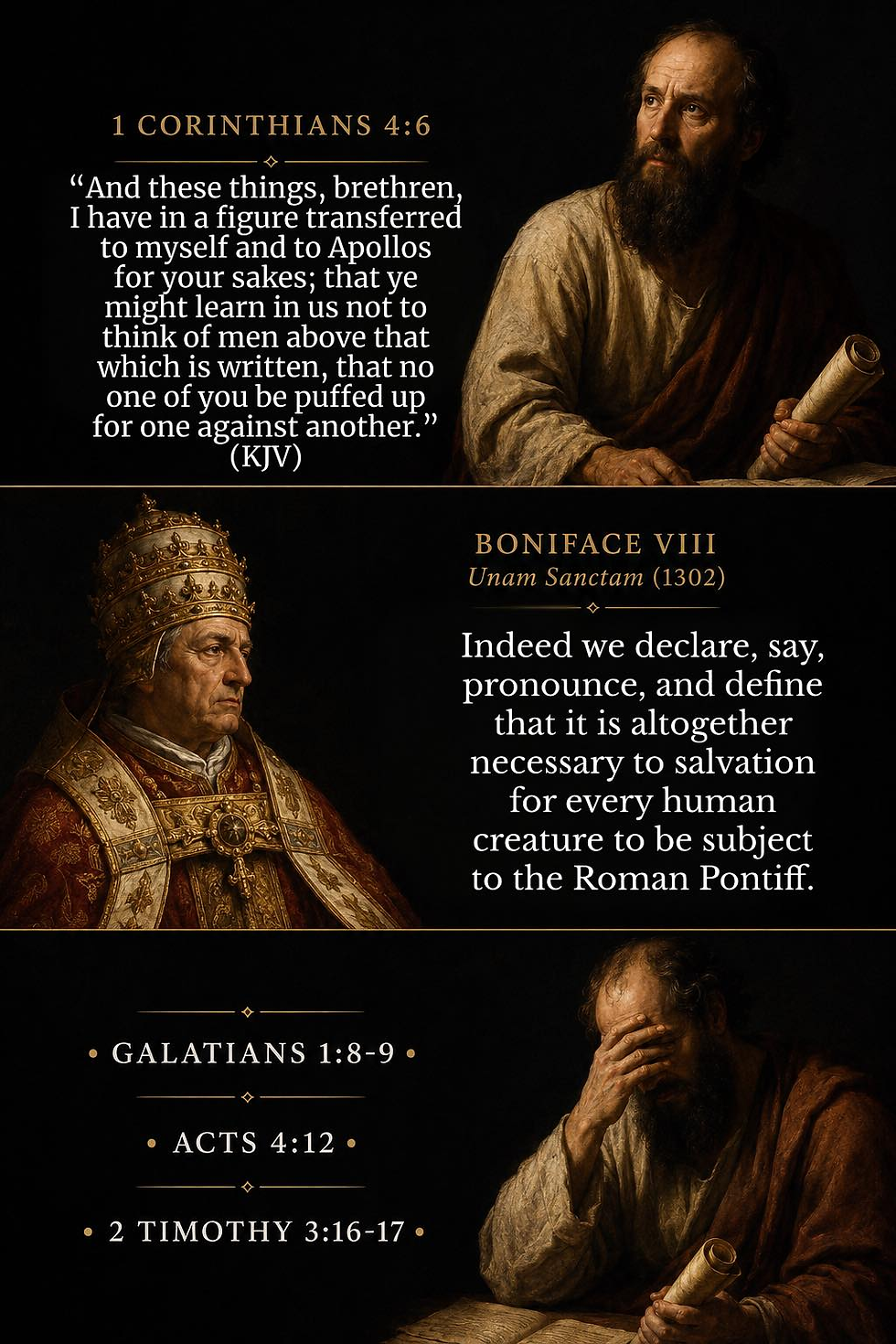
Comments